
 By NexoPaths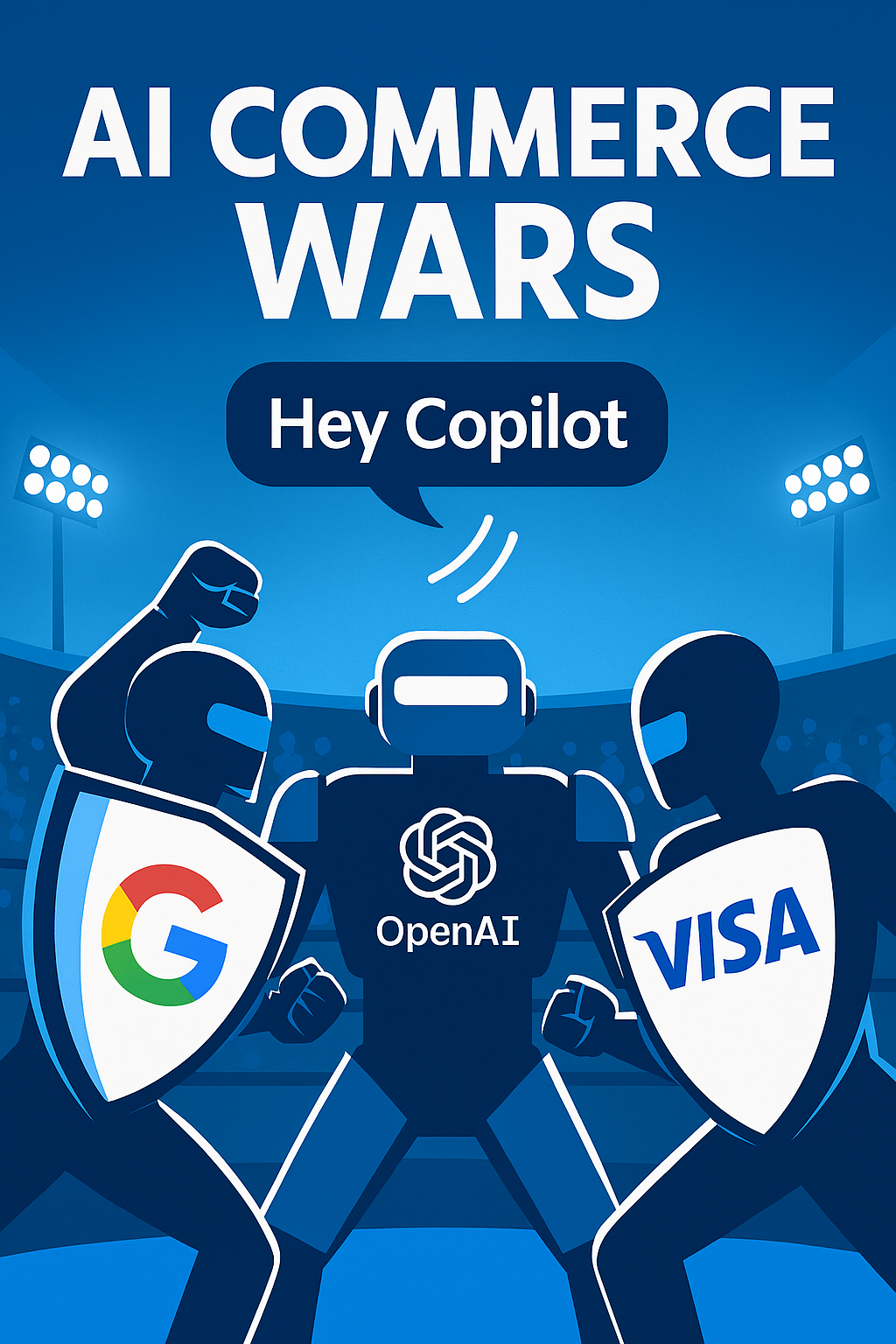
In the rapidly evolving world of artificial intelligence, a new battleground has emerged—agent protocols. These frameworks govern how autonomous AI agents interact with users, systems, and each other. And now, three titans—Google, OpenAI, and Visa—are locked in a high-stakes race to define the future of AI-driven commerce.
This isn’t just a technical rivalry. It’s a struggle over who will control the standards that shape how we shop, pay, and interact with digital agents. The implications are massive: from how your AI assistant buys groceries to how businesses automate transactions across platforms.
🧠 What Are Agent Protocols?
Agent protocols are the rules and systems that allow AI agents to:
- Understand user intent
- Communicate with other agents or services
- Execute tasks autonomously
Think of them as the “TCP/IP” of AI commerce—foundational standards that determine interoperability, security, and user experience.
🏁 The Three Front-Runners
1. Google: A2A Protocol (Agent-to-Agent)
Google’s A2A protocol is designed to enable seamless communication between AI agents across platforms. It’s part of their broader push to create an interoperable agent ecosystem that spans search, shopping, payments, and productivity.
- Key Features:
- Cross-platform agent communication
- Integration with Google Shopping Mode
- Real-time price tracking and purchasing2
Google’s vision is a world where your AI agent can talk to other agents—whether they’re on Amazon, Shopify, or your bank—and complete tasks without human intervention.
2. OpenAI: Proprietary Agent System
OpenAI has taken a different approach. Their agent system is tightly integrated with their models and tools, focusing on deep personalization and contextual reasoning.
- Key Features:
- Autonomous task execution
- Context-aware decision-making
- Integration with ChatGPT and third-party plugins
OpenAI’s agents are designed to act like digital employees—handling everything from scheduling to purchasing, but within a controlled ecosystem.
3. Visa: Agent Payments Protocol (AP2)
Visa’s AP2 protocol is built for secure, scalable financial transactions. It’s less about general AI and more about enabling agents to make payments safely and compliantly.
- Key Features:
- Tokenized payments
- Fraud detection and compliance
- Integration with banks and merchants2
Visa’s goal is to become the backbone of AI-driven commerce, ensuring that when your agent makes a purchase, it’s fast, secure, and universally accepted.
⚔️ The Protocol Wars: Why It Matters
As these giants push their protocols, the industry faces a critical challenge: fragmentation. Without a unified standard, AI agents may struggle to communicate across platforms, leading to:
- Incompatibility: Your Google agent might not work with OpenAI’s plugins.
- Security risks: Competing standards could create vulnerabilities.
- User confusion: Different behaviors and interfaces across ecosystems.
This echoes past tech battles—like VHS vs. Betamax or iOS vs. Android—but with far broader implications. AI agents aren’t just apps; they’re autonomous actors that make decisions, spend money, and interact with sensitive data.
💸 AI Commerce: The Stakes Are High
AI-driven commerce is projected to reach $2.3 trillion by 2030, according to industry analysts. That includes:
- Autonomous shopping
- Subscription management
- Financial planning
- B2B procurement
Whoever controls the agent protocols will shape how this money flows. Will your AI assistant use Google’s A2A to find the best deal? Or OpenAI’s system to negotiate a subscription? Or Visa’s AP2 to make the payment?
🧩 Interoperability vs. Control
The tension boils down to two competing philosophies:
🟢 Google and Visa: Open Standards
Both companies are pushing for protocols that work across platforms. Google wants agents to collaborate, while Visa wants payments to be universally accepted.
🔵 OpenAI: Controlled Ecosystem
OpenAI favors a more curated experience, where agents operate within a trusted environment. This allows for deeper personalization but limits cross-platform functionality.
This mirrors the Apple vs. Android debate—control vs. openness. And just like in mobile, the outcome will shape the future of AI.
🛡️ Security and Ethics
With agents making decisions and spending money, security is paramount. Visa’s AP2 protocol includes:
- Tokenization: Replacing sensitive data with encrypted tokens
- Behavioral analytics: Detecting fraud based on agent behavior
- Compliance layers: Ensuring agents follow financial regulations
OpenAI and Google are also investing in ethical guardrails, but the lack of unified standards makes enforcement difficult. What happens when a rogue agent exploits a protocol gap? Or when agents from different ecosystems misinterpret each other?
🔮 What Comes Next?
Industry insiders predict three possible outcomes:
1. Standardization
A consortium could emerge to unify protocols—similar to W3C for the web. This would require cooperation between rivals, which is unlikely but not impossible.
2. Platform Lock-In
Users may be forced to choose an ecosystem—Google, OpenAI, or Visa—and stick with it. This could stifle innovation and limit user freedom.
3. Middleware Solutions
Startups may build bridges between protocols, allowing agents to translate and collaborate. This could delay fragmentation but won’t solve the root issue.
📝 Final Thoughts
The battle between Google, OpenAI, and Visa isn’t just about technology—it’s about who controls the future of AI commerce. As agents become more autonomous, the protocols they follow will determine how we shop, pay, and interact with the digital world.
For consumers, this means more convenience—but also more complexity. For developers, it’s a call to action: build with interoperability in mind. And for regulators, it’s a wake-up call: the age of autonomous commerce is here, and it needs guardrails.
The protocol wars have begun. Let’s hope they end with collaboration, not fragmentation.