
 By NexoPaths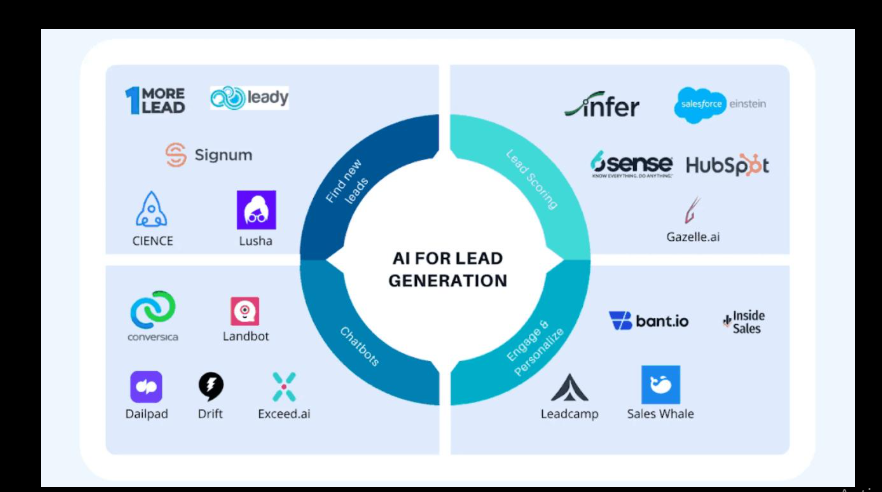
That’s not what the term means anymore. The tools landing on “best AI sales automation tools” lists in 2026 are doing things that genuinely would have sounded like science fiction five years ago — writing personalized outreach that reads like a human wrote it after researching the prospect for an hour, predicting which deals are about to go cold before a rep even notices, and running entire qualification conversations without anyone on your team lifting a finger.
If you’re trying to figure out which of these tools are worth your time (and your budget), this is for you. We’re going to walk through the categories that matter, the standout tools in each one, and — just as importantly — how to actually combine them without ending up with twelve subscriptions and nobody using half of them.
Why “Sales Automation” Means Something Different Now

The shift from “automation” to “intelligence” is the real story behind 2026’s best-performing sales stacks.
The old version of AI sales automation tools was rules-based. If a lead does X, send email Y three days later. It was useful, but it was also rigid — every prospect got the same sequence regardless of whether they were a perfect fit or a complete mismatch.
What’s different now is that the automation has a brain attached to it. The AI sales automation tools we’re talking about today don’t just execute pre-written rules — they make judgment calls. They decide which leads deserve attention right now, what message would actually land with a specific person, and when to back off versus push forward. That’s a genuinely different category of software, even if it still gets filed under “sales automation” on review sites.
And the conversion impact is real. We touched on the broader shift in how AI is replacing traditional lead generation — this article picks up where that one left off, focusing specifically on the tools doing the heavy lifting once a lead is in your pipeline.
What Actually Changes When You Add AI to Sales
Before we get into specific tools, it’s worth being clear-eyed about what AI sales automation tools actually changes — because the marketing around these tools tends to overpromise, and the real benefits are more interesting than the hype anyway.
Reps stop wasting time on dead-end leads
This is probably the single biggest win. AI scoring and prioritization means your team’s energy goes toward the prospects who are statistically most likely to convert, based on patterns from your actual closed deals — not gut feel, not “this one seems promising.”
Outreach stops looking the same to everyone
AI-generated personalization pulls from real signals — recent funding news, job changes, content engagement, tech stack — and uses that to shape the message. The prospect feels like someone actually looked at their situation, because something did.
Follow-up never falls through the cracks
One of the quiet killers of conversion rates is simply… forgetting. A rep gets busy, a follow-up slips, and a warm lead goes cold. AI sequencing tools don’t forget, don’t get busy, and don’t have a bad week.
Data entry stops eating everyone’s afternoon
This one doesn’t sound exciting, but it might matter most for morale.AI sales automation tools that auto-log calls, summarize meetings, and update CRM fields give reps back hours every week — hours that go straight into actual selling.
“The best AI sales tools don’t replace the rep’s judgment. They make sure the rep’s judgment gets applied to the right people, at the right time, with the right information.”
The Top AI Sales Automation Tools
Alright, let’s get into it. These are grouped roughly by what stage of the sales process they’re strongest at — though most of them overlap into adjacent areas too.

Each of these tools targets a specific friction point in the funnel — the trick is knowing which one solves your actual problem.
1
HubSpot Breeze (AI Sales Hub)
Best For: All-in-one teams that want AI baked into their existing CRM if you’re already living inside HubSpot, Breeze is the easiest “AI upgrade” you’ll ever make — it’s not a separate tool you have to learn, it’s intelligence layered onto workflows your team already knows. It handles lead scoring, drafts follow-up emails based on deal context, summarizes call recordings, and flags deals that are showing risk signals (like a champion going quiet) before a human would notice.
2
Clay
Best For: Building hyper-targeted, enriched prospect lists at scale clay has become something of a cult favorite among growth teams, and once you see it in action it’s easy to understand why. It pulls data from dozens of sources — LinkedIn, company websites, hiring boards, news — and uses AI to enrich every contact on your list with context that would take a human researcher hours to gather. The real magic is in how customizable it is; you can build workflows that score, segment, and personalize messaging all before a lead even enters your outreach sequence.
Best For: Teams that want prospecting, enrichment, and outreach in one place Apollo has quietly become one of the most complete platforms in this space. It combines a massive contact database with AI-powered enrichment, intent signals, and outreach sequencing — so you’re not stitching together three separate tools to go from “who should we talk to” to “we’re talking to them.” Its AI scoring also gets noticeably smarter the longer you use it, since it learns from your actual reply and conversion data.
4
Instantly AI
Best For: Cold email outreach at volume, without landing in spam cold email has a deliverability problem most people don’t think about until it’s too late — your domain gets flagged, and suddenly nothing lands in inboxes. Instantly AI tackles this head-on with automated inbox warm-up and deliverability monitoring, while also using AI to write and rotate subject lines and message variants so your outreach doesn’t look templated. For teams running outbound at real volume, this is less “nice to have” and more “the thing that keeps your whole operation working.”
5
Intercom Fin
Best For: Qualifying inbound leads through conversational AI, 24/7Fin is what happens when you take the chatbot concept and actually give it a brain. It can hold a real conversation with a website visitor, answer nuanced product questions, handle objections, and — critically for sales teams — gather qualifying information and book meetings without a rep needing to be online. For businesses with global traffic, this single tool can meaningfully change how many inbound leads actually turn into booked calls.
6
Gong
Best For: Understanding what’s actually happening in your sales calls gong records, transcribes, and analyzes sales calls — but the part that makes it genuinely valuable is what it does with that data afterward. It identifies patterns across your best reps’ calls (what they say, when they say it, how they handle pushback) and surfaces that as coaching insight for the rest of the team. It also flags deal risk based on conversation signals — if a prospect’s tone shifts or a competitor gets mentioned, Gong catches it even if the rep doesn’t.
7
6sense
Best For: Knowing which companies are ready to buy before they contact you6sense operates in that “intent data” category that’s become such a big deal in AI sales — it tracks anonymous buying signals across the web to tell you which companies are actively researching solutions like yours, often weeks before they’d ever fill out a form. Combined with its AI-driven account prioritization, your team ends up spending time on accounts that are genuinely in-market, instead of accounts that just happen to fit a demographic profile.
Best For: Orchestrating multi-channel sequences with AI-driven timing. Salesloft has been a sequencing platform for a long time, but its AI layer is what makes it worth a spot here — it analyzes engagement patterns to figure out the optimal timing, channel, and messaging for each step of an outreach cadence, adjusting in real time based on how prospects respond. It’s the kind of tool that quietly makes every other tool in your stack perform a little better, just by getting the timing right.
For a broader look at how these tools fit into the wider AI landscape — including tools outside of sales — our roundup of the 25 best AI tools for businesses in 2026 is a good companion read.
Quick Comparison: Which Tool Fits Your Stage
| Tool | Primary Use Case | Best Suited For | Standout AI Feature |
|---|---|---|---|
| HubSpot Breeze | All-in-one CRM + AI | Teams already on HubSpot | Deal risk alerts |
| Clay | Lead enrichment & research | Growth & ops teams | Custom enrichment workflows |
| Apollo.io | Prospecting + outreach | SMBs and startups | All-in-one database + sequencing |
| Instantly AI | Cold email at scale | High-volume outbound teams | Deliverability automation |
| Intercom Fin | Inbound qualification | Companies with steady web traffic | 24/7 conversational AI |
| Gong | Call intelligence & coaching | Teams with multiple reps | Conversation-based deal risk |
| 6sense | Intent data & ABM | Enterprise & mid-market B2B | Predictive account scoring |
| Salesloft | Sequencing & cadence | Outbound-heavy sales orgs | AI send-time optimization |
Building Your Stack Without Overcomplicating It

More tools isn’t the goal. The right combination, working together, is.
Here’s something nobody tells you when you start browsing “best AI sales tools” lists: you don’t need most of them. The temptation is to bookmark ten tools and try to implement all of them at once, which usually ends with three half-configured platforms nobody on your team actually opens.
A much better approach is to think about your stack in three layers, and pick one (maybe two) tools per layer:
Layer 1 — Find and enrich. This is where Clay, Apollo, or 6sense live. The job here is identifying who to talk to and gathering the context needed to talk to them well.
Layer 2 — Engage and sequence. This is Instantly AI, Salesloft, or Apollo’s outreach features. The job here is getting your message in front of the right person, at the right time, through the right channel.
Layer 3 — Convert and analyze. This is your CRM with AI built in (HubSpot Breeze), your conversational AI (Intercom Fin), and your call intelligence (Gong). The job here is turning engaged prospects into closed deals, and learning from every interaction along the way.
If you’re a small team, you genuinely might only need one tool per layer — and some platforms (Apollo, HubSpot) span two layers on their own. Start small, get real usage data, then expand based on where the actual friction is.
If your sales motion leans heavily on content — case studies, comparison pages, outreach copy — pairing these tools with strong AI writing support makes a noticeable difference. Our guide to the best AI writing tools for 2026 covers what’s worth using on the content side of your funnel.
How These Tools Actually Move Conversion Numbers
It’s easy to talk about AI tools in the abstract — “increases efficiency,” “improves personalization” — without actually explaining where the conversion lift comes from. So let’s get specific.
Notice that none of these gains come from “doing more.” They come from doing the right things — reaching out at the right time, with the right message, to the right person, and catching problems before they become lost deals. That’s the throughline across every tool on this list: precision over volume.
There’s also a compounding effect that’s easy to miss. When your lead scoring improves, your reps spend time on better leads. When they spend time on better leads, your close rate improves. When your close rate improves, your CRM data gets richer — which makes your lead scoring even more accurate. Each layer feeds the next one, and the gains tend to accelerate over the first few months rather than plateau.
Common Mistakes Teams Make When Adopting These Tools
Before you go sign up for five trials this afternoon, a few honest warnings — because the tools themselves are rarely the problem. How they get implemented usually is.
Buying the tool before fixing the data. AI tools are pattern-matching machines. If your CRM has duplicate contacts, missing fields, and inconsistent stage definitions, the AI will confidently learn the wrong patterns. Clean data first, sophisticated tools second.
Turning everything on at once. AI features that automatically send emails, update records, or make scoring decisions can do real damage if they’re misconfigured — and you won’t notice until weeks of bad outreach has gone out. Roll out new automation in stages, and review output closely for the first few weeks.
Letting AI personalization become a substitute for actual personalization. AI-generated outreach is a starting point, not a finished product — especially for high-value accounts. The teams getting the best results use AI to do the research and drafting, then have a human do a final pass before anything important goes out.
Measuring activity instead of outcomes. More emails sent, more calls logged, more “AI-qualified” leads — none of that matters if it doesn’t translate to revenue. Set up your reporting to track these tools against actual pipeline and closed-won numbers, not just usage metrics.
A Realistic Rollout Plan
If you’re starting from close to zero, here’s a sequence that tends to work without overwhelming a team:
Month 1 — Clean and centralize. Get your CRM data in order. Deduplicate, fill gaps, and make sure your stages and fields are consistent. This sounds boring, but it’s the foundation everything else sits on.
Month 2 — Add one enrichment/prospecting tool. Pick one tool from the “find and enrich” layer — Apollo is a solid starting point for most teams because it covers prospecting and basic outreach in one place. Get your team comfortable with it before adding anything else.
Month 3 — Layer in AI scoring and a conversational agent. If you’re on HubSpot, this might just mean turning on Breeze features you already have access to. Add Intercom Fin (or similar) to your website to start capturing and qualifying inbound traffic around the clock.
Month 4 and beyond — Add intelligence and optimization tools. Once the fundamentals are working and your team trusts the system, layer in something like Gong for call intelligence or 6sense for intent-driven prioritization. By this point you’ll have real usage data to guide which gaps actually need filling.
This pace feels slow compared to “implement everything this quarter” energy, but it’s the difference between a stack your team actually uses and a stack that becomes shelf ware by month six.
The Final Word
There’s a version of this article that ends with “AI is the future of sales, adopt it now or get left behind” — and honestly, that’s true, but it’s also not that useful on its own. The more useful takeaway is this: the tools on this list aren’t magic. They’re force multipliers for a sales process that’s already reasonably sound.
If your targeting is off, AI-powered outreach will just reach the wrong people faster. If your follow-up process is inconsistent, automation will make that inconsistency more visible, not less. The tools amplify whatever’s already happening underneath — which means the real work is still strategy, positioning, and understanding your buyer. AI just makes sure that work actually reaches the people it’s meant for, at the moment they’re ready to hear it.
That’s the version of “AI sales automation” worth chasing. Not automation for its own sake — automation that clears the noise so the parts of selling that actually require a human get all the attention they deserve.
“Pick the tools that solve a problem you can already feel. Implement slowly. Measure against revenue, not activity. Everything else follows from there.”
And if you’re building out the rest of your AI-powered workflow — content, lead generation, or general business operations — our 2026 roundup of the best AI tools for businesses and our piece on how generative AI is reshaping content creation are both worth bookmarking alongside this one.